


There is at least one other creature in the world that loves your dog as much as you do — fleas. That’s right. Fleas will do just about anything to spend time with your dog; they love running their sleek little bodies through your dog’s hair, latching onto and nibbling your dog’s skin, and feeding off of your dog’s blood for, what could be, a long time. Given the opportunity, fleas will lay up to 50 eggs a day knowing they can raise their family of flea babies in your home.
Although all dogs are at risk of getting fleas, some are more susceptible, because they are in environments where fleas thrive.
It appears as though a flea’s love for dogs might be a little more on the conditional side, meaning when certain conditions are present fleas are more likely to thrive.

For starters, fleas love a warm, humid environment—indoors, outdoors, as well as on your dog. Fleas are not seasonal parasites, any temperature above 10℃ or 50°F is favourable for them to be active. This means that if you live in areas that are warm and humid year-round fleas will be active outside and inside, but if you live in an area with four seasons fleas may be more active indoors than they are outdoors in some seasons.
While every dog’s body offers the warmth that fleas love, not all dogs provide the same level of moisture. Dogs only sweat through glands on the pads on their feet, for example. Their skin is moist when they lick it or scratch it excessively, which is something that some dogs are prone to do, especially when bitten by a flea. Flea bites are small and firm and very itchy compared with a mosquito bite. Many dogs are allergic to the saliva that a flea transmits each time they bite. Dogs that are allergic to flea bites tend to lick, scratch and bite themselves more than other dogs. When a dog tries to relieve the itch caused by flea bites, causes repeated inflammation in the dog’s skin which encourages more scratching, and thus becomes a vicious cycle.
Adult fleas prefer to hide in difficult to reach areas, like hind quarters on a dog, while flea larvae love dark hiding areas in your home.
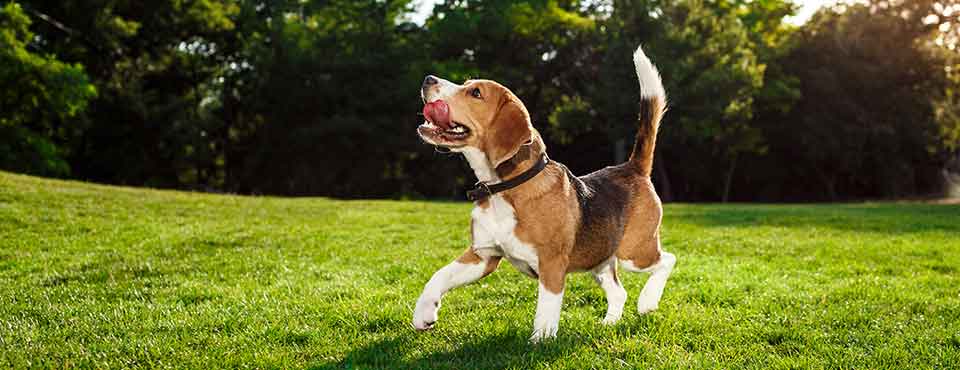
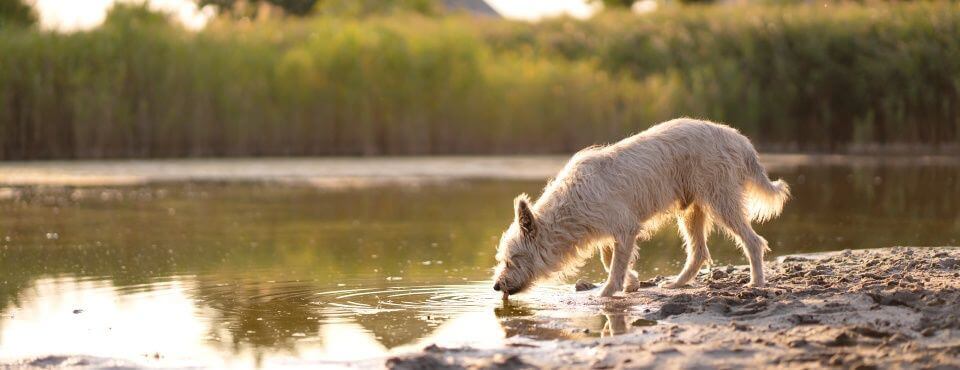
It’s easier to spot small, dark fleas on a dog with a white or sable coat than it is on a dog with a dark brown or black coat. Fleas tend to land on a dog and immediately dive from the coat down to the skin, where they will feed and lay eggs. Dogs with longer coats provide the perfect cover for fleas to run around on the dog’s skin, hidden underneath the fur and make themselves at home. It’s important to remember that fleas will latch onto any dog, though. Sometimes the features of a dog provide just enough dark spaces, such as under the legs, neck, ears, and tail, where light doesn’t reach. Consider a dog with long floppy ears or one with a long tail that curls up onto its back. These dogs offer more hiding places than those with short, perky ears or flat, nubby tails.
Finally, remember that it is specific conditions that allow flea populations to thrive, and when a dog finds itself in that environment, it becomes infected with fleas. Fleas jump onto their potential hosts instinctively in response to environmental stimuli, not by choice. You can probably admit that there’s a reason you fell in love with your dog—maybe it was the way it crawled into your lap when you first met or the way it wagged its tail the first time you said hello—chances are it was love at first sight, right? Well, fleas are blindly attracted to three things: heat, carbon dioxide and vibration. They’ll hop onto a dog in a heartbeat. When it comes to protecting your dog from offering fleas the perfect place to call home, be sure to choose flea protection that lasts long enough to eliminate the young fleas’ life stages in your carpets and furniture. It can take three months of effective continuous treatment to drive the fleas in your house to extinction. Your vet can help you map out a plan that’s easy to follow year round.

Find a Vet Near You!
Our search tool connects you with world-class support near you










 Go To United States
 Austria
 Belgium
 Czech Republic
 Denmark
 Europe
 Finland
 France
 Germany
 Greece
 Hungary
 Ireland
 Israel
 Italy
Italy Netherlands
 Norway
 Philippines
 Poland
 Portugal
 Romania
 Saudi Arabia
 Slovakia
 South Africa
 Spain
Spain Sweden
 Switzerland
 Turkey
 United Kingdom